www.baader-observatories.com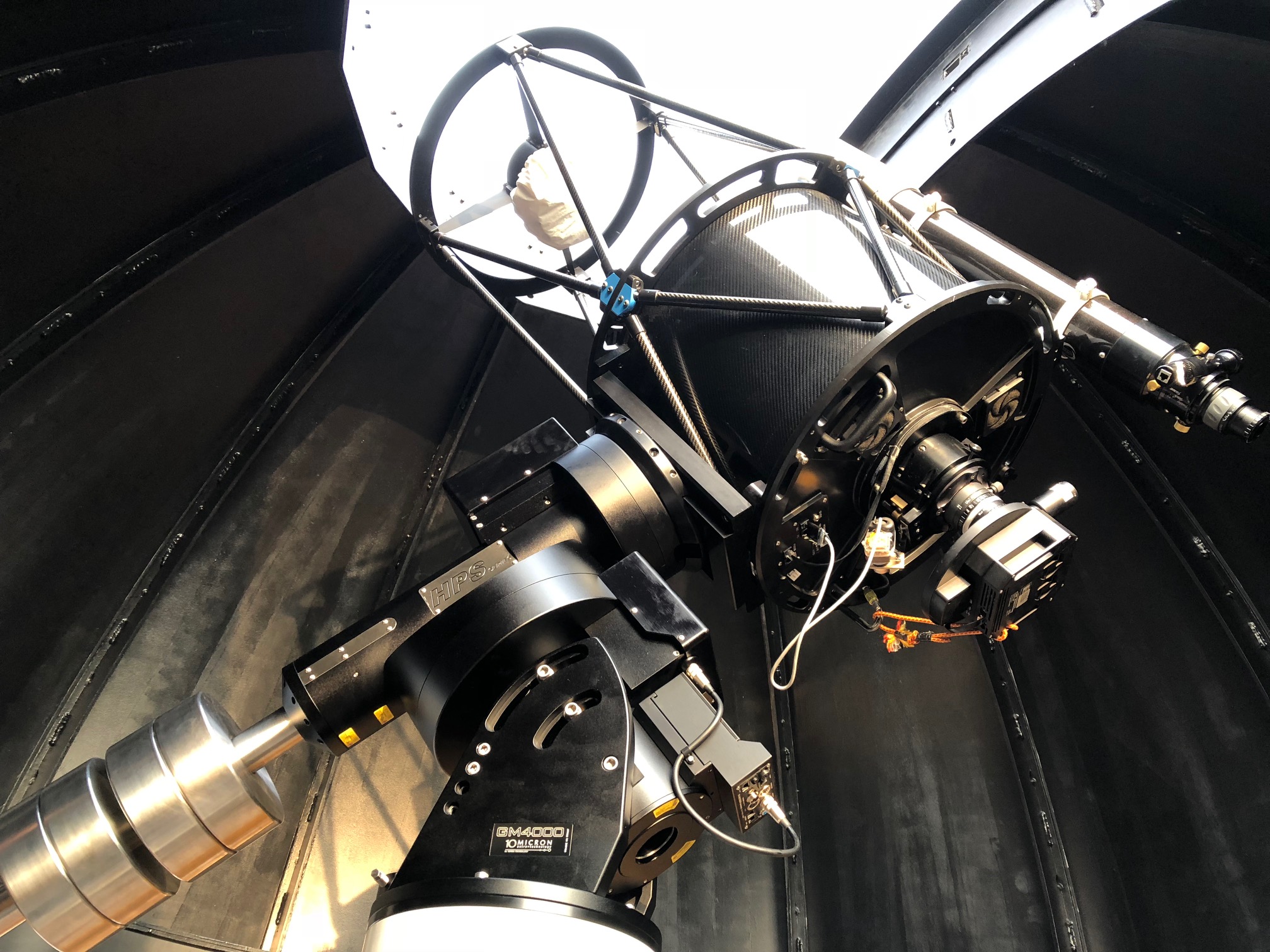

Technical upgrade at the Hans-Haffner Observatory
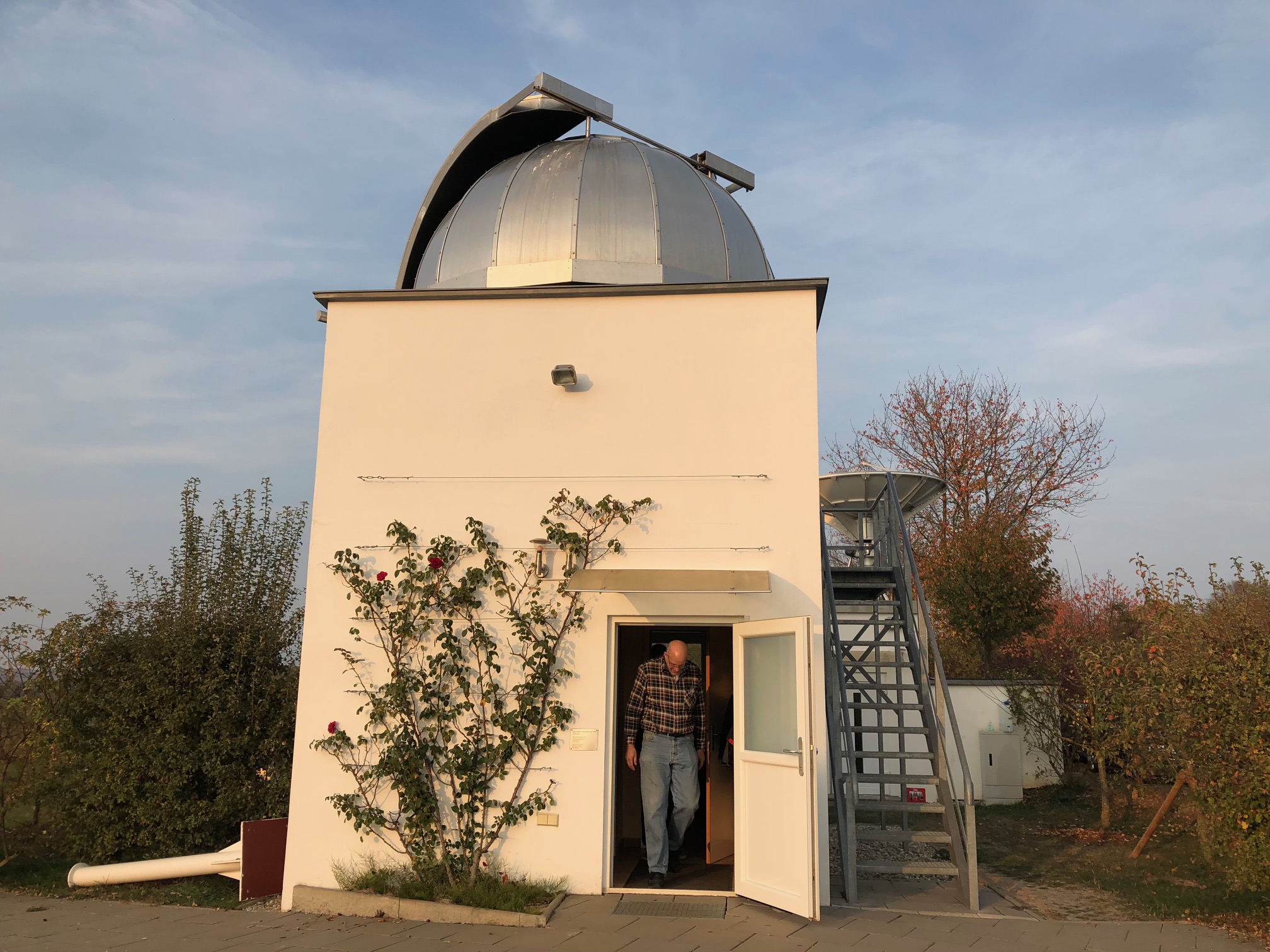
The Hans-Haffner Observatory of the FKG is part of the “Naturwissenschaftliches Labor für Schüler am FKG e. V.” (Science Laboratory for Students at FKG). This experimental and research laboratory for students is, unlike many other student laboratories, not located at a university or research institution, but at the Friedrich-Koenig-Gymnasium (FKG).
In addition to the Hans-Haffner Observatory, the student laboratory includes a chemistry lab, a biology lab, a laser and optics laboratory, and a scientific library. It enables students to conduct their own experiments in all STEM fields (mathematics, computer science, natural sciences, and technology).
The observatory was built between 2007 and 2009 in the municipality of Hettstadt. As no public funds were available for the project, the observatory was constructed through voluntary work by a team of students and teachers in close cooperation with parents and many external partners from industry and crafts. In this way the observatory could be inaugurated at the end of the International Year of Astronomy 2009, on December 18, 2009.
Through a cooperation agreement with the University of Würzburg, the Hans-Haffner Observatory is officially both a school and university observatory. Through the close cooperation with the University of Würzburg, the observatory could be equipped with high-quality instrumentation: the main telescope is a CDK 20 from PlaneWave, which was originally mounted on a GM 4000 QCI. The associated CCD camera is a G4-16000 from Moravian with an RVB Bessel filter set as well as a luminance and an H-alpha filter.
The main project at the observatory is AGN monitoring. In this cooperative project, students of the science-focused classes at FKG together with astronomers from the Chair of Astronomy at the University of Würzburg and the Chair of Astroparticle Physics at the Technical University of Dortmund measure brightness variations of active galactic nuclei (AGN) in order to determine the masses and separations of possible binary systems of black holes. These measurements complement the research work of the astronomers in Würzburg and Dortmund, who monitor the gamma radiation of these AGN with the MAGIC telescope system on the Canary Island of La Palma.
Through the measurements of the students at the Hans-Haffner Observatory of the FKG, a long-term data set on the development of now more than twenty AGN in the optical range of the electromagnetic spectrum has been created since 2012. This data set is intended to make it possible, through time-series analysis, to detect the signatures of binary systems of black holes that are assumed to be the central engines at the center of an AGN. After initially only a few dozen nights, in recent years the students have been able to carry out brightness measurements on at least 80 evenings or nights per year.
New equipment in October 2018
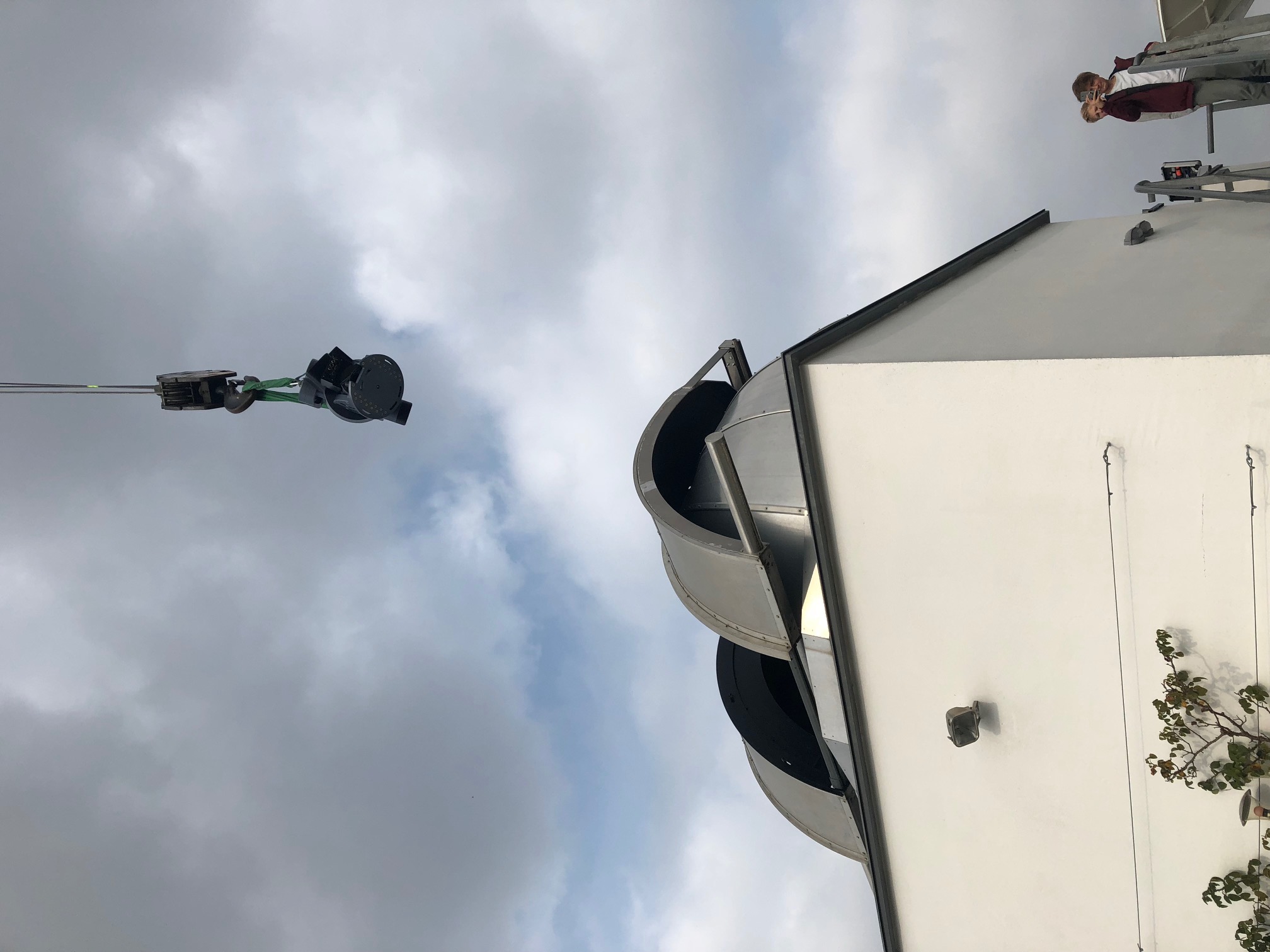
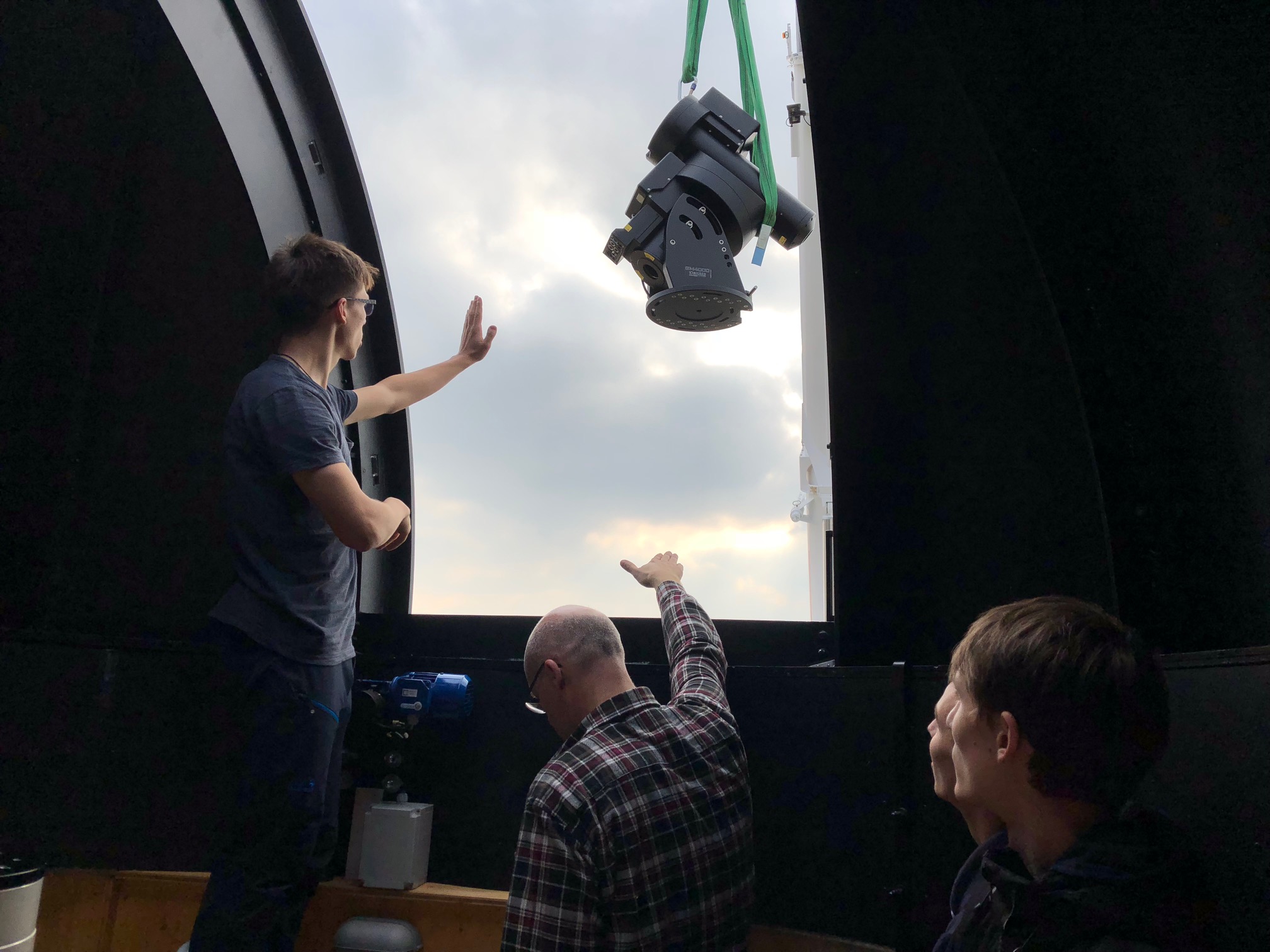
Due to the great commitment and the high scientific output of the work at the Hans-Haffner Observatory, Baader Planetarium GmbH offered to assist with the technical further development of the observatory. The Hans-Haffner Observatory has obtained not only the main telescope and the previous mount from Baader, but also numerous other technical equipment. With the support of the Chair of Astronomy, on October 10, 2018 the previous GM 4000 QCI was lifted out of the observatory dome with the help of a crane and replaced by the new GM 4000 HPS II.
The first test images with the new mount already showed the exceptionally high quality of the new system with additionally simplified operation. In the meantime, after many further measurement nights of the AGN group and images for astrophotography, working at the Hans-Haffner Observatory without the new mount is hardly imaginable.
Using alignment through the program ModelCreator, the guiding-free tracking time could be increased from two minutes with the QCI to ten minutes with the HPS II. If the telescope is not positioned too low above the horizon, exposure times of 20 minutes without guiding are even possible. The measurement nights of the AGN group are now significantly more efficient. During one night the observatory usually measures between 10 and 15 AGN, for which guiding previously had to be restarted each time. With the new HPS II, the time previously required for this can now be used for additional objects.
In addition to the highly precise tracking, the HPS II also impresses with its extremely accurate pointing. Thanks to the precise guiding-free tracking, the accurate pointing, and the simple operation of the mount, even students from grade 9 can now independently carry out measurements without assistance from a teacher.
We thank Baader Planetarium, without whose generous support this technical upgrade would not have been possible!